
Chapter 8: The Highway Superintendent's Tale – A Sworn Account of Retaliation
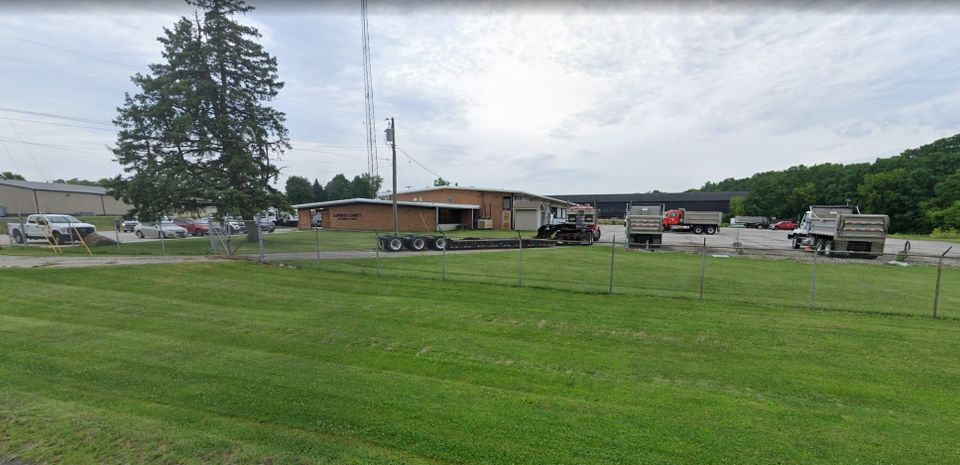
The narrative surrounding the federal wrongful termination lawsuit against LaPorte County and Commissioner Connie Gramarossa takes on a sharper, more personal focus when viewed through the eyes of one of its central figures: Allen Stevens. As the former LaPorte County Highway Superintendent and the LaPorte County Republican Chairman, Stevens found himself caught in the crosshairs of what he described under oath as a relentless campaign of political retaliation and demands for personal loyalty.
On January 8, 2026, Allen Stevens sat for a sworn deposition in the ongoing federal civil rights lawsuit (Bergeron et al. v. LaPorte County et al., Case No. 3:23-cv-01003-DRL) [1]. His testimony provides a detailed, firsthand account of the inner workings of the county highway department during the tumultuous first half of 2023, shedding light on the events that led to his own firing and the termination of seasonal mower Dion Bergeron.
While Stevens's own federal claims were dismissed under the Garcetti doctrine—a legal principle stating that a public employee's speech is not protected by the First Amendment when made as part of their official job duties—the judge explicitly noted that this ruling was an appealable legal determination [2]. More importantly, the dismissal of Stevens's claims did not invalidate his factual testimony regarding Commissioner Gramarossa's conduct. As perhaps the most knowledgeable witness to the internal dynamics of the department, his sworn statements remain a critical piece of the puzzle in understanding the environment that led to Dion Bergeron's surviving First Amendment retaliation claim.
The Recruitment and the Immediate Demands for Loyalty
Allen Stevens was not a political novice. He had served as the LaPorte County Republican Chairman for five years and had a solid background in transportation and construction management, having worked for the Indiana Department of Transportation (INDOT) since 2010 [1]. In January 2023, he was recruited to the position of County Highway Superintendent by Commissioners Connie Gramarossa and Joe Haney. According to Stevens, their stated goal was to have "decision-making being made by the data instead of by politics" [1].
However, Stevens testified that the reality of the job quickly contradicted that initial promise. Almost immediately upon taking office, he faced intense pressure from Commissioner Gramarossa to terminate key personnel.
"When I became county highway superintendent, Commissioner Gramarossa was adamant that I fire [Assistant Superintendent Andrew] Simmermeyer and [financial staffer] Charity Glaser immediately," Stevens testified. "I think she had concerns about... where their allegiances were. She was a new commissioner, and she was trying to build her team. And she—I got the idea that she felt they were not going to be loyal teammates of her agenda." [1]
Stevens pushed back against these demands, explaining that firing a 21-year veteran like Simmermeyer in the middle of winter would result in a disastrous loss of institutional knowledge. Gramarossa temporarily backed down, but the incident established a clear pattern: employment decisions were expected to be based on personal loyalty to the commissioner, not on job performance or departmental needs [1].
The Pressure to Hire Family
The demands for loyalty were soon followed by demands for patronage. Stevens testified that Commissioner Gramarossa applied "pretty regular pressure" on him to hire her son, Nicholas (Nick) Gramarossa, for a part-time seasonal mower position [1].
According to Stevens, Gramarossa would make pointed comments reminding him of who was responsible for his employment:
"She would say things like, you know, 'You got a pretty good job out there at the county highway because of me. Do you got anywhere where you can put Nick at? Why don't you put Nick into one of these mowing spots?'" [1]
Stevens refused to hire the commissioner's son. He testified that his refusal was based on legitimate safety concerns, noting that Nick Gramarossa is deaf, which Stevens believed posed a significant risk for a roadside mowing position [1]. Furthermore, Nick Gramarossa never actually submitted a formal application for the job [1].
The 463 GOP Club and the Chicago Crash Fallout
While Stevens was navigating these internal pressures, a separate political storm was brewing outside the highway department. In March 2023, Commissioner Gramarossa was involved in a late-night car accident on the north side of Chicago while driving a county-owned vehicle [3]. The incident sparked outrage among local Republicans, particularly regarding the unauthorized use of the vehicle and the subsequent handling of the insurance settlement [3].
The epicenter of this outrage was the 463 GOP Club, a social auxiliary arm of the LaPorte County Republican Party. At a monthly breakfast meeting, members discussed taking official action against Gramarossa, such as a formal censure or declaring her a "Republican not in good standing" [1].
Stevens testified that Dion Bergeron and his wife, Elizabeth (who had run against Gramarossa in the 2022 Republican primary), were highly vocal at this meeting.
"He [Dion Bergeron] was kind of one of the ring leaders, him and his wife, in wanting to see something done and something done quick," Stevens recalled. "There was a lot of angry people at that meeting about... what she had done. It made a little bit of a black mark on the party." [1]
Stevens noted that Gramarossa was acutely aware of the Bergerons' criticism. "She took the comments made by Dion and Liz Bergeron at 463 GOP as—you know, she... was pissed. I mean, she was angry," he testified [1].
The Confrontation in the Parking Lot
The tension culminated in a dramatic confrontation between Commissioner Gramarossa and Superintendent Stevens in early June 2023, roughly a week before Stevens was fired.
Dion Bergeron had been hired as a seasonal mower on May 8, 2023. Stevens testified that Bergeron was a good employee who consistently surpassed the daily production of his peers [1]. However, Bergeron's political speech outside of work had clearly drawn the commissioner's ire.
According to Stevens's sworn testimony, Gramarossa arrived at the highway department office during regular work hours "in a huff." She kicked Stevens's door hard, pointed at him, and demanded, "You, outside" [1].
Stevens complied, following her into the parking lot. Gramarossa pointed to the back of Dion Bergeron's SUV, which was covered in vinyl lettering advertising his podcast and social media channels.
"She pointed at the window; and she said, 'You'll hire this disloyal fucker, but you won't hire my son. I see how you want it to be,'" Stevens testified. [1]
Stevens stated he was "stunned" by the outburst and did not respond before Gramarossa sped off in her vehicle [1]. He interpreted her statement as a clear, albeit implicit, directive to fire Bergeron for his political disloyalty.
The Firings and the "Broken Tractor" Pretext
Stevens did not fire Bergeron. He testified that he knew his refusal to comply with Gramarossa's demands meant his own days were numbered. "After my interaction with Commissioner Gramarossa, I knew he [Bergeron] was going to be short time one way or the other," Stevens said [1].
On June 12, 2023, Commissioner Rich Mrozinski met privately with Stevens and told him he was fired and needed to pack his things [1]. However, the retaliation did not end with a verbal dismissal. Nine days later, at the June 21 Board of Commissioners meeting, both Mrozinski and Gramarossa formally voted to remove Stevens from his position as highway superintendent, ensuring her fingerprints were officially on his termination [1].
Immediately following Stevens's departure, Dion Bergeron was also terminated. The official reason given was that his assigned tractor had broken down and there was no other work for him to do [1].
Stevens testified that this explanation was highly suspect. He noted that there were seven functional mowing machines available at the time, and that seasonal mowers were routinely reassigned to other tasks, such as brush removal, when equipment failed [1].
More damningly, Stevens testified that he called Commissioner Joe Haney the afternoon of Bergeron's firing to ask if the termination was proper. According to Stevens, Haney confirmed that the "broken tractor" excuse was a pretext. Haney told him that there were other mowers available and that there was still ample budget money allocated for seasonal employees [1].
"It's the nature of government to use all the money you're appropriated, and they had a lot of money still appropriated for seasonal employees," Stevens testified. "I couldn't figure out why they wouldn't want to use it all." [1]
The termination notice for Bergeron was signed by Assistant Superintendent Andrew Simmermeyer—the same employee Gramarossa had previously demanded Stevens fire. Stevens offered his opinion on why Simmermeyer carried out the firing:
"I feel that he had just seen his supervisor, you know, get terminated by this lady that he knew wouldn't hesitate to terminate him. So I feel he acted... somewhat under duress because he wanted to keep his job." [1]
A Broader Pattern of Retaliation
When asked directly for his personal opinion on why Dion Bergeron was fired, Stevens did not mince words:
"I believe because his wife ran in the primary against Connie and that they were both critical of her behavior, that that's why he was terminated." [1]
Crucially, Stevens testified that Bergeron's firing was not an isolated incident. When asked by the plaintiff's attorney if he knew of other county employees who had been fired as a result of Gramarossa's actions, Stevens confirmed that there was a broader pattern across multiple departments.
"I know there have been multiple other employees that were terminated, and they would—they had actually—several of them have reached out to me for your [the attorney's] number," Stevens testified [1].
When pressed for names, Stevens struggled to recall them precisely, hesitating between "Don Newland" and "Doug Newland" before acknowledging he could not be certain. The employee in question is Doug Newland, and Stevens noted there were others he could not recall at the time [1].
Stevens's deposition paints a vivid picture of a county government where political loyalty was prioritized over operational efficiency, and where perceived slights were met with swift retaliation. His testimony provides crucial context for the ongoing federal lawsuit, illustrating how the demand for personal allegiance ultimately led to the wrongful termination claims that Commissioner Gramarossa now faces in federal court.
References
[1] Deposition of Allen Lee Stevens, Bergeron et al. v. LaPorte County et al., Case No. 3:23-cv-01003-DRL, United States District Court for the Northern District of Indiana, January 8, 2026.
[2] Bergeron et al. v. LaPorte County et al., Case No. 3:23-cv-01003-DRL, Opinion and Order (N.D. Ind. June 18, 2025). Available at: https://law.justia.com/cases/federal/district-courts/indiana/inndce/3:2023cv01003/116857/40/
[3] WIMS Radio, "Commissioner Haney Statement on Connie Gramarossa’s Chicago Crash," May 12, 2023. Available at: https://wimsradio.com/2023/05/12/commissioner-haney-statement-on-connie-gramarossas-chicago-crash/